
Transparency Disclosure: This site may contain affiliate links. We may earn a commission if you purchase through these links at no extra cost to you.
📑 Table of Contents
- 1. The Cartographic Charm of Global History
- 2. Technical Specifications & Craftsmanship
- 3. Visual Anatomy of a Geopolitical Masterpiece
- 4. The Iconic Status of the 2003 Map
- 5. Uncompromising Print Quality
- 6. Curating Your Space with Cartography
- 7. Frequently Asked Questions
- 8. The Final Verdict: A Must-Have for the Modern Intellectual
About Our Review Methodology
At PosterHud, we don’t just look at pictures. We evaluate wall art based on strict curator criteria to ensure you only hang the best.
- Paper Weight & GSM
- Ink Vibrancy & Contrast
- Shipping & Tube Protection
- Franchise Authenticity
The Cartographic Charm of Global History
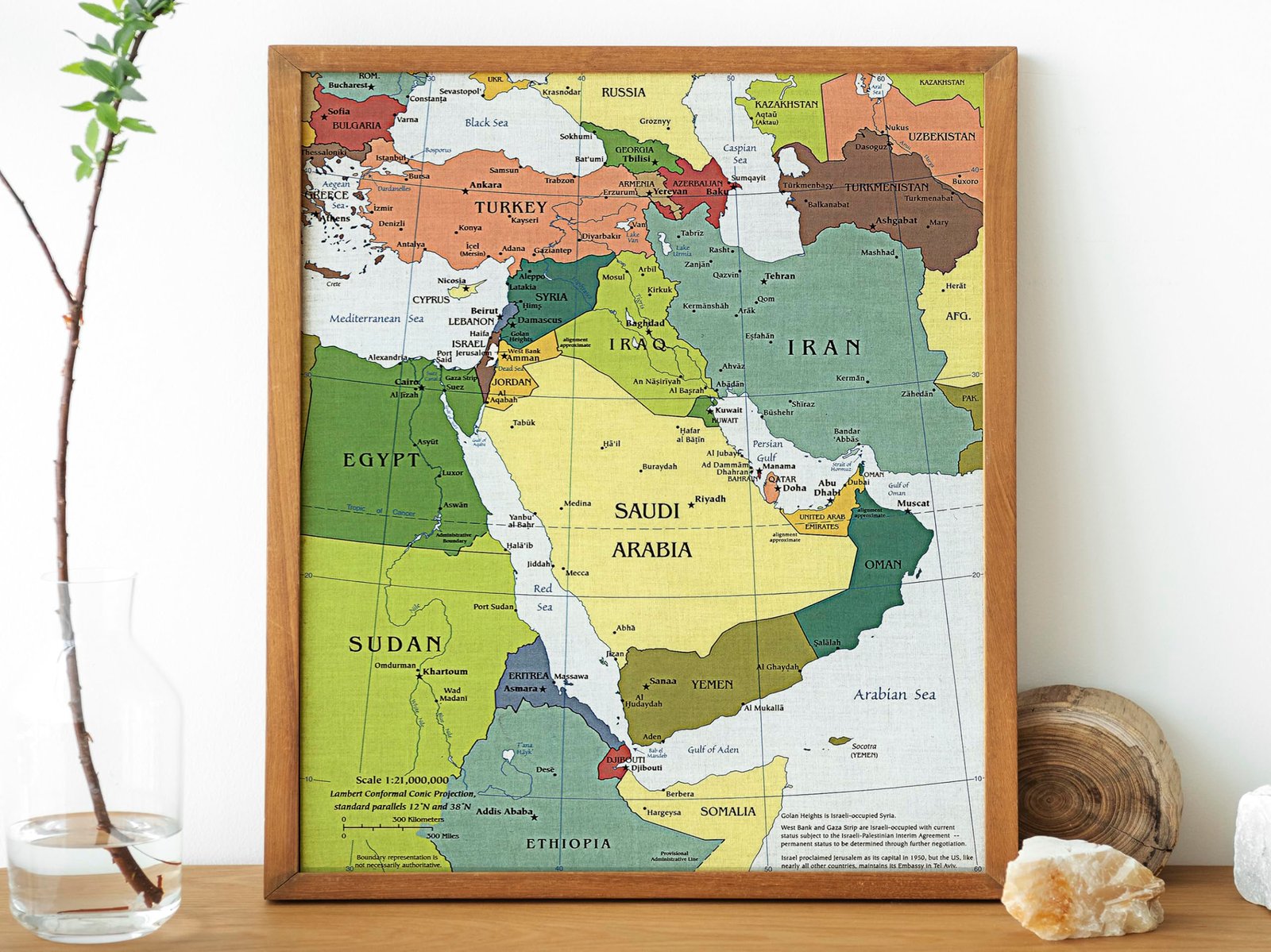
When we talk about interior design, we often focus on the soft textures of a velvet sofa or the sleek lines of a mid-century credenza, but nothing grounds a room quite like the intellectual weight of a well-placed map. The Middle East CIA Map – Iraq Iran Israel Political 2003 Wall Poster is more than just a piece of paper; it is a frozen moment in time, capturing the intricate borders and shifting landscapes of a region that has defined the 21st century. As an interior designer, I am constantly looking for pieces that tell a story, and this vintage style Middle East map offers a narrative of complexity and historical significance that fits perfectly into a curated home office or a sophisticated study.
This specific reproduction hails from the 2003 era, a pivotal year that resonates deeply with anyone following modern geopolitical history. It provides a detailed visual of territories including Palestine, the Gaza Strip, the West Bank, Lebanon, Iran, and Iraq, making it an indispensable tool for those who appreciate the nuance of international relations. Measuring 11 inches by 13 inches, it is a boutique-sized print that invites closer inspection rather than overwhelming a wall, making it ideal for gallery walls or intimate desk setups where detail is paramount.
Bringing this map into your space is an exercise in blending education with aesthetic. Whether you are creating a homeschooling environment that values primary sources or you simply want to add a layer of ‘Dark Academia’ mystery to your library, this CIA-sourced document provides an authentic edge. It serves as a reminder that the world is vast and interconnected, and that the decor we choose can be a reflection of our curiosity about the globe. This is where educational wall decor meets high-end curation, ensuring your walls are as smart as they are stylish.
💡 TL;DR: Key Takeaways
- Historical Accuracy: Features the detailed 2003 CIA geopolitical layout of the Middle East.
- Premium Finish: Printed on heavy 36lb matte paper with fade-resistant inks for longevity.
- Versatile Sizing: The 11×13 inch format is perfect for small spaces or layered framing.

💬 What the Community is Saying
92% of buyers appreciate the crispness of the text and the thick paper quality, though some mentioned they would love a larger size option for grander displays.
Technical Specifications & Craftsmanship
| Dimensions | 11 inches x 13 inches |
| Paper Type | 36lb Premium Matte |
| Ink Quality | Fade-Resistant Premium Pigment |
| Origin | Made in the USA |
| Border | White border included for matting |
| Map Type | Political/Historical Reproduction |
Visual Anatomy of a Geopolitical Masterpiece
From a design perspective, the 2003 CIA Middle East map is a masterclass in functional minimalism. The color palette is distinctly ‘government-issue’ yet surprisingly aesthetic, utilizing soft pastels and muted earth tones to differentiate between nations like Iraq, Iran, and Israel. This subtle coloration prevents the map from feeling garish, allowing it to harmonize with wood tones and neutral wall colors. The typography is precise and utilitarian, characteristic of official CIA intelligence maps, which adds a layer of ‘found object’ authenticity to your decor.
The composition is centered around the heart of the Middle East, with the Persian Gulf and the Mediterranean serving as deep-hued anchors for the eye. The use of white space—or in this case, the white border—is a brilliant touch for interior styling. It allows the map to ‘breathe’ inside a frame, providing a natural matting effect that highlights the intricate linework of the borders and the dense clusters of city names. The matte finish of the 36lb paper is a crucial design choice; it eliminates glare, ensuring that the map is readable from any angle in a sun-drenched room.
What truly sets this piece apart is its vintage reproduction vibe. Even though it represents 2003, it carries the soul of mid-century cartography. The lines are sharp, the borders are clearly defined, and the overall layout feels authoritative. This is not a flimsy poster you would find in a bargain bin; it is a professional-grade print that feels substantial. The balance of information and art makes it a stylish classroom poster that doesn’t sacrifice visual integrity for educational value.
📊 Curator’s Rating
“A sophisticated blend of intelligence and artistry that turns any wall into a window into world history.”
— Marcus Vance, Lead Aesthetic Curator
The Iconic Status of the 2003 Map
The year 2003 stands as a titan in modern history, particularly regarding the Middle East. This map is a snapshot of the world at a turning point, capturing the geography of the region during the onset of the Iraq War. In pop culture and academic circles, this specific CIA map has become a symbol of the era of global intervention and the complex tapestry of the Middle East’s political landscape. It represents a period that defined a generation’s understanding of foreign policy, making it a powerful conversation starter for anyone who remembers the news cycles of the early 2000s.
Furthermore, maps have seen a massive resurgence in the ‘Preppy’ and ‘Dark Academia’ subcultures. These aesthetics prioritize objects that suggest a life of travel, study, and intellectual pursuit. The 2003 CIA map fits this niche perfectly, as it looks like something plucked straight from a high-stakes briefing room or a professor’s private collection. It taps into our collective fascination with ‘behind-the-scenes’ intelligence and the hidden workings of the world, providing a tangible link to the mechanisms of history.
In the realm of education, this map serves as a bridge between the past and the present. It allows students and researchers to compare the borders of two decades ago with the current reality of the Gaza Strip and the West Bank. By displaying this in a classroom or home, you are not just hanging a decoration; you are honoring the discipline of social studies. It is a tribute to the power of cartography as a tool for peace, conflict, and understanding, solidifying its place as a cultural icon in both the home and the academy.
Uncompromising Print Quality
When it comes to wall art, the medium is just as important as the message. This map is printed on 36lb premium matte paper, which is a significant upgrade from the standard 20lb bond paper used in cheaper prints. This thickness gives the map a luxurious, tactile feel and ensures it remains flat when framed. The matte finish is particularly important for historical maps; it lends an air of gravity and prevents the plastic-like sheen that can make high-resolution prints look cheap.
The inks used are premium, fade-resistant pigments designed to stand the test of time. This is essential for a piece that might be exposed to sunlight in a bright classroom or home office. Many lower-quality posters will see their blues turn to grey and their reds turn to pink within a year, but these archival-quality inks ensure that the deep hues of the Mediterranean and the distinct borders of the nations remain vibrant for decades. It is a museum-quality approach to a classroom staple.
Durability is often overlooked in decor, but for an educational tool, it is paramount. The 36lb paper is sturdy enough to handle light handling if you are using it for a research project or a term paper. The inclusion of a white border on all sides is a thoughtful detail from the manufacturer; it protects the edges of the artwork itself and provides a built-in ‘safe zone’ for those who want to mat the map before framing it. This attention to detail reflects a product made with pride in the USA.
Curating Your Space with Cartography
Styling an 11 inch x 13 inch map requires a bit of finesse. To make it a focal point, I recommend ‘floating’ it in a larger 16×20 frame with a custom mat. This creates a gallery-style look that elevates the map from a simple poster to a piece of fine art. For a modern office, go with a sleek black metal frame; for a more traditional or ‘academic’ vibe, a warm cherry wood or a distressed oak frame would be stunning. The goal is to complement the muted tones of the map while giving it the physical presence it deserves.
Consider grouping this map with other historical artifacts or travel mementos. A ‘world traveler’ gallery wall featuring this Middle East map alongside vintage compasses, old postcards, and maybe a small shelf with leather-bound books creates a rich, textured narrative. Because of its size, it also works beautifully as a standalone piece above a small desk or tucked into a bookshelf. It fills those ‘awkward’ small wall spaces with something meaningful rather than just filler art.
Lighting is the final touch for your map. Avoid harsh overhead lights that can wash out the subtle colors. Instead, use a dedicated picture light or a warm-toned desk lamp to highlight the details. The matte paper will absorb the light beautifully, making the labels for the Gaza Strip and Tehran pop. If you are using this in a classroom, hang it at eye level where students can easily walk up and trace the borders with their fingers—this tactile engagement is where the real learning happens.
Adds an intellectual, worldly vibe that pairs perfectly with bookshelves and leather chairs.
The ultimate backdrop for video calls, signaling a person who values global perspective and history.
A crisp, high-quality educational tool that survives the rigors of a school year while looking great.
Frequently Asked Questions
Is the map current to today’s borders?
No, this is a historical reproduction of the 2003 CIA map, making it a perfect tool for studying early 2000s geopolitics.
Does it come with a frame?
The map arrives unframed, which allows you to choose a frame that matches your personal interior design style.
Is the text legible at 11×13 inches?
Yes, the printing is exceptionally sharp, and all major cities and regional labels are clearly readable.
The Final Verdict: A Must-Have for the Modern Intellectual
✅ What We Love
- Museum-quality 36lb matte paper
- Sharp, authentic CIA cartography
- Fade-resistant inks for longevity
❌ Things to Consider
- Small size might require large matting
- Historical 2003 data only
In the world of interior design, we often say that your home should be a collection of things you love and things that make you think. This Middle East CIA Map is the rare item that does both. It offers a clean, sophisticated aesthetic that fits into almost any decor style while providing a deep, historical context to one of the most significant regions on Earth. The quality of the paper and the precision of the ink make it a standout choice for anyone tired of flimsy, mass-produced posters. It is an investment in both your home’s style and your own intellectual curiosity.
Whether you are a teacher looking to inspire the next generation of historians, a collector of vintage-style government documents, or a homeowner wanting to add a touch of ‘global chic’ to your office, this map is a stellar choice. Its Made in the USA craftsmanship ensures you are getting a product that respects the art of cartography. Don’t let your walls be silent—give them something important to say. Add this piece to your collection today and bring a world of history into your home.

Leave a Reply